


Your dad wants CA because his colleague’s son did it and is doing well. Your neighbour aunty is pushing MBA. Your school friend saw some fintech course on YouTube and won’t stop talking about it. Everyone around you has an opinion and not one of them is giving you actual data.
So here it is. Four courses after 12th commerce that are genuinely in demand worldwide right now, what they actually pay, and what nobody bothers telling you before you commit.
Table of Contents
US Certified Management Accountant (US CMA)
Salary: Rs 8 to 28 lakh in India. USD 70,000 to 130,000 internationally.
Most commerce students haven’t heard of this one yet and honestly that works in your favour right now. The US CMA from the Institute of Management Accountants is still flying under the radar in India, which means companies are hiring faster than qualified people are coming out.
India’s Global Capability Centers are paying 30 to 40 percent more to US CMA holders compared to people doing the same job without it. The reason is not complicated. The syllabus covers FP&A, cost management, variance analysis, and business strategy, which is word for word what GCC finance teams do every single day. It was practically built for this work.
Two exam parts. Around 12 to 18 months of preparation if you’re consistent. You can clear both while finishing your BCom and step into the job market holding your degree and an internationally recognised certification together. For anyone who wants a well-paying finance role without spending five or six years getting there, this is the most practical option sitting in front of you right now.
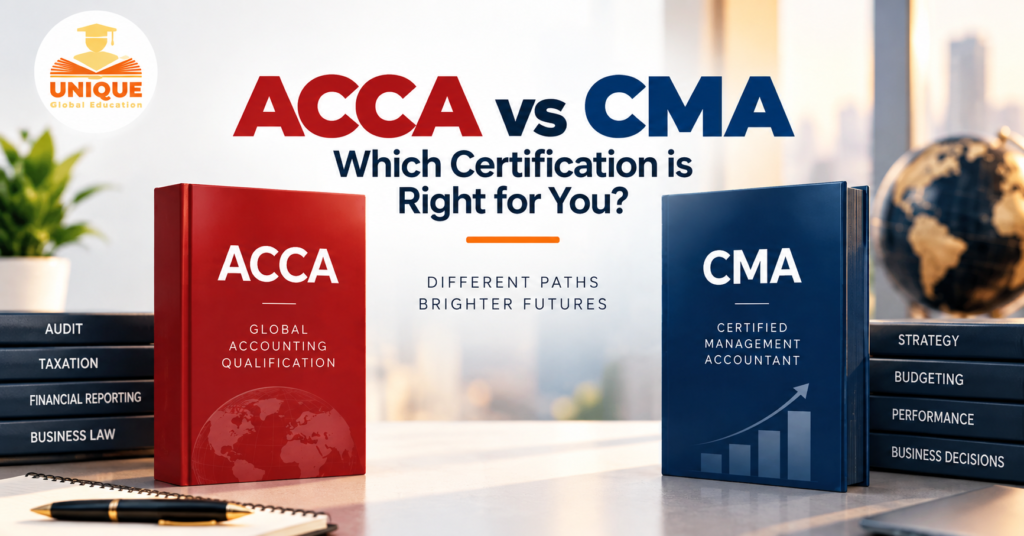
ACCA (Association of Chartered Certified Accountants)
Salary: Rs 6 to 20 lakh in India. GBP 35,000 to 65,000 in the UK and similar numbers across the Middle East and Southeast Asia.
If going abroad is even a small thought somewhere in your head, pay attention to this one. ACCA works in over 200 countries, Big 4 firms across the world accept it, and in Gulf markets like Dubai, Abu Dhabi, and Doha it sits almost at the same level as CA for hiring purposes. That kind of reach is genuinely hard to find in any professional qualification.
13 papers across three levels. You set your own pace around your degree and your life, which matters a lot when you’re studying while managing financial pressure at home. If your BCom already covered certain subjects, you get exemptions. You’re not starting from scratch.
There’s also a tie-up with ICAI. If you decide later that you want Indian CA as well, your ACCA papers count toward exemptions. It’s a qualification that keeps your options open rather than boxing you into one city or one kind of role.
Chartered Financial Analyst (CFA)
Salary: Rs 8 to 30 lakh in India. USD 90,000 to 180,000 internationally.
Portfolio managers in London know what CFA means. Hedge funds in New York ask for it. Asset management firms in Singapore expect it. You don’t have to explain yourself in an interview when you’re holding this charter. It does that work for you before you even open your mouth.
Three levels. Level 1 pass rate sits around 40 percent worldwide and it gets harder after that. Nobody should sugarcoat that. But the people who come out the other side and land equity research or fund management roles are earning salaries that most of their college batchmates won’t see for years after graduation.
You can register for Level 1 in your final year of BCom. A lot of students start preparing in second year, clear it before their degree finishes, and walk into interviews with both already done. That combination opens doors very quickly.
One thing worth saying clearly though. CFA is for people who want to work in capital markets and investment management. If that world doesn’t genuinely interest you, don’t pick this just because the numbers look good. The people thriving in CFA careers actually enjoy reading about companies, thinking about valuations, and following how money moves. If that sounds like you, honestly there is no better qualification anywhere.
Financial Risk Manager (FRM)

Salary: Rs 6 to 20 lakh in India. USD 80,000 to 150,000 internationally.
Risk management is the function everyone ignores right up until something breaks badly. Then suddenly nobody can find enough qualified people. Banks, insurance companies, NBFCs, and consulting firms are all building out risk teams because regulations keep getting stricter and financial products keep getting more complicated. That combination means consistent demand and not enough supply.
The FRM from the Global Association of Risk Professionals is the top qualification in this space worldwide. Two parts. Market risk, credit risk, operational risk, risk management in financial institutions. Exactly what the people sitting in those teams need to know.
If numbers and financial mathematics come naturally to you, preparing for FRM feels engaging rather than exhausting. If they feel like a battle, spend your BCom years building those foundations properly before going into this. The senior roles in risk, Head of Risk, Chief Risk Officer, Risk Advisory, pay very well and there are rarely enough people qualified enough to fill them.
What Nobody Mentions Before You Start
Every single course on this list has produced people who are doing really well and people who are confused about where it all went wrong. The certificate sitting on your wall does not do anything by itself.
The US CMA holders picking up that GCC premium walked into interviews able to actually talk about cost variance and FP&A from real preparation, not just a line on their resume. The CFA people who landed good fund roles had spent time genuinely reading about companies, forming opinions, and building basic models before anyone hired them. The ACCA graduates doing well in Dubai treated every paper as something to understand rather than just survive.
Pick what connects to the kind of work you can picture yourself doing on a regular Tuesday afternoon three years from now. Then go at it properly. Not halfway while watching what everyone else chose.
Frequently Asked Questions
US CMA. Two parts, 12 to 18 months, finishable alongside your BCom. The GCC premium for certified holders in FP&A is very real and freshers with the certification are starting at salaries that take non-certified peers several years to reach.
Not really. CFA is built specifically for capital markets and investment management. If you’re uncertain about that direction, US CMA or ACCA will open more doors across more industries. Come back to CFA when you’re sure, not as a backup plan.
Yes, all four work alongside BCom. US CMA and FRM are particularly well-suited for parallel preparation. ACCA gives exemptions for BCom subjects and lets you pace yourself. CFA Level 1 registration opens in your final year. Planning from second year makes a real difference.
ACCA for accounting roles across UK, Middle East, Southeast Asia. CFA for investment management anywhere globally. US CMA for FP&A and management accounting in the US, Middle East, and GCC markets. FRM for risk roles at international banks. All four cross borders well. Choose based on the work, not just the country.
US CMA and CFA both run scholarship and reduced fee programs for students from developing economies. ACCA has instalment payment options. A lot of GCC employers and large banks will sponsor or reimburse certification costs once you’re already working. Getting a job first and letting an employer fund the next step is a path more people should seriously think about.