



Every second person I talk to who’s considering CMA US asks me some version of the same thing. I’m already stretched thin at work, so how do I even think about adding an exam prep into this mess. Fair question, CMA US for Working Professionals is not easy. I’ve watched enough people go through this journey, some crash and burn, most figure it out eventually, and there’s a pattern to what actually works.
Let me just say this upfront. It’s not easy. Anyone who tells you it’s a breeze is either lying or has an unusually chill job. But doable? Absolutely. I’ve seen people with brutal schedules, consultants who travel four days a week, finance managers closing books every month end, even someone juggling a newborn at home, clear this exam. So, if you’re wondering whether it’s realistic for you specifically, it probably is, you just need the right approach.
Table of Contents
Why This Exam Doesn’t Demand a CMA US for Working Professionals To Quit There Job
CMA US was designed differently than a lot of other professional qualifications out there. Two parts. That’s it. No endless papers stretched across years. You’re not required to sit in a classroom every evening either, which honestly is the biggest relief for someone working nine- or ten-hour days. You study when you can, however you can, at whatever pace your life allows that month.
This is precisely why it attracts so many working professionals in the first place. It was never built for full time students with unlimited free hours. It works around people who already have careers.
Get Details for CMA US Course
Stop Lying to Yourself About Your Schedule
Before touching a single book, actually sit down and look at your week honestly. Not the version where you imagine studying three hours every morning starting Monday. I mean actually look at where your time goes. Maybe it’s your train ride to work. Maybe it’s after 9pm once dinner’s done and the house is quiet. Maybe weekends are your only real window.
People who clear this exam on their first try usually aren’t the ones with tons of spare time lying around. They’re just brutally realistic about the little time they do have, and they build around that instead of some fantasy version of their schedule.
Guard Your Study Hours Like a Client Call
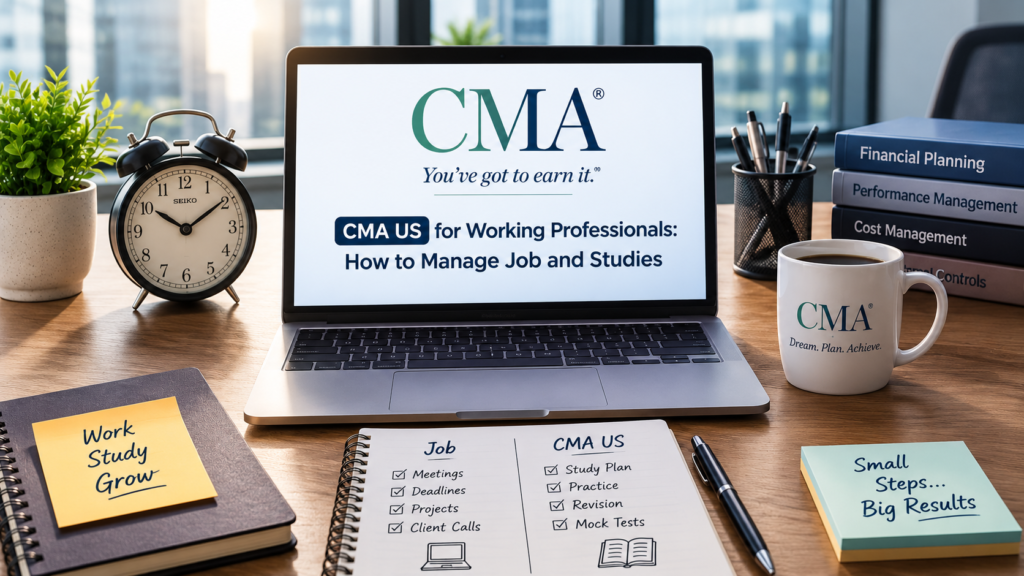
Here’s the thing nobody really tells you. If studying stays this vague thing you’ll “get to eventually,” it just won’t happen. There’s no one chasing you the way your boss chases a deadline. So block the time. Put it in your calendar exactly like you would a meeting you can’t skip.
Doesn’t matter if it’s forty-five minutes before work or ninety minutes late at night. What matters is you show up daily, even if it’s short. An hour a day for four straight months beats one exhausting eight-hour Sunday marathon every single time.
Chop the Syllabus into Small Wins
CMA US covers a lot, financial planning, strategic management, cost analysis, and staring at the entire syllabus after a draining workday can make you want to close the laptop and never open it again.
So don’t look at the whole mountain. Break it into small daily or weekly targets. Not “cover Part 1 this week” but something specific like finishing one chapter and doing twenty practice questions by Thursday evening. Small wins keep the momentum going, and momentum matters more than people realize.
Your Commute Is Wasted Time Right Now, Fix That
If you spend even thirty minutes commuting each day, you’re sitting on free study time you’re probably not using. Recorded lectures, audio notes, flashcards on your phone, all of it works during that dead stretch. Add that up over a month and you’ve quietly gained ten or more extra hours without touching your evenings.
Have the Conversation with Your Manager
A lot of people avoid mentioning their CMA US plans at work because they think it’ll look like they’re not fully committed to the job. In my experience it’s usually the opposite. Most managers respect someone investing in their own growth. Mention your exam dates early, and you might get a lighter workload during that stretch, or at least avoid getting pulled into extra projects right before your test. Worth the awkward conversation.
Don’t Do This Completely Alone
Studying solo for months while also working full time gets lonely fast, and lonely leads to quitting. Find a study group online, join a community of other CMA aspirants, or just find one friend attempting it with you. On the days you want to throw in the towel, watching someone else push through tends to pull you back in too.
Energy Matters More Than Time
This one gets overlooked constantly. It’s not only about finding the time; it’s about having enough left in the tank to actually understand what you’re reading. If you’re wiped out after work, trying to absorb cost accounting concepts at midnight is a losing battle. Sometimes a short, sharp session when you ‘re fresh beats a long tired one where you reread the same page four times and retain nothing.
Some Weeks Will Fall Apart, Let Them
There will be weeks where work just explodes on you. A last-minute deadline, a client emergency, a trip you didn’t plan for. Your study schedule will take a hit, and that’s fine, that’s normal, that happens to literally everyone attempting this. The people who eventually pass aren’t the ones with a flawless streak. They’re the ones who don’t let one rough week snowball into quitting altogether.
At the end of the day, managing CMA US alongside a full-time job comes down to using the hours you already have with intention, instead of waiting for hours that were never going to magically appear. Thousands of working professionals before you have pulled this off while still showing up to their jobs every single day. You can too.
Frequently Asked Questions
Somewhere around 10 to 15 hours weekly tends to work for most people. It’s less about chasing a specific number and more about showing up consistently week after week.
Yes. Plenty of people with genuinely tough, high-pressure jobs have done it. The difference maker is realistic planning and not waiting around for some perfectly calm phase at work that rarely ever comes.
Usually somewhere between 12 and 18 months, though it really depends on how many hours a week you can consistently give it.
Honestly, whichever suits your energy. Some people are sharp at 6am before work drains them, others only focus once the house goes quiet at night. Try both for a week or two and you’ll know pretty quickly which one’s yours.
It happens to almost everyone, so don’t spiral over it. Just reassess where you stand, tweak your weekly targets a bit, and get back into rhythm instead of trying to cram everything back at once.