

You clear CMA US, ACCA or CFA and think the hard part is behind you and then take the CMA US / ACCA / CFA Interview Preparation lightly. Then the interview calls start and you realise the exam and the interview room test completely different things. I’ve sat on the hiring side for finance and content roles, and the pattern is always the same. The candidates who get offers aren’t always the ones with the best exam scores. They’re the ones who know how to talk about what they studied like it actually means something to the job in front of them.
If you’re at that stage right now, resume updated, certificate done, not sure what the interview will actually look like, this is for you, CMA US / ACCA / CFA Interview Preparation .
Table of Contents
Understand What Your Qualification Tells the Interviewer
Before you prepare a single answer, think about what the interviewer already assumes when they see your certification on the resume.
CMA US tells them you can handle cost accounting, budgeting, internal controls, and decisions that affect how a business runs day to day. They’ll expect you to talk numbers with some business sense behind them, not just bookkeeping accuracy.
ACCA tells them you’re strong in financial reporting, audit, tax, and corporate law, usually with an IFRS or UK-style base. A lot of interviewers won’t ask you to define a standard. They’ll give you a scenario and see if you can apply it.
CFA puts you in the markets and investments box. Equity research, valuation, portfolio work. They want to know you have a view on markets, not just that you can run a formula.
So here’s the mistake people make constantly. A CMA US candidate walks into an FP&A interview and answers every question like they’re prepping for a CFA panel. Match your answers to what your qualification is actually known for and to the role you’re sitting for.
Go Back to Basics, Properly
Passing the exam and being ready for an interview are two different things. Exams reward structured problem solving. Interviews reward being able to explain the same idea to a person who might already know it better than you.
Pick a few core topics and try explaining them out loud, without your notes. For CMA US, that’s variance analysis, standard costing, budgeting, relevant costing for decisions. For ACCA, go back to consolidations, revenue recognition under IFRS 15, financial instruments, group accounts. For CFA, revisit valuation basics, financial statement analysis, and portfolio theory if you’re still in the earlier levels.
One thing that actually helps is picking a real annual report and going through it with your own qualification’s lens. ACCA folks can look for how a company recognises revenue. CFA candidates can try a rough DCF using public numbers. It sounds basic but it’s the difference between sounding like you memorised something and sounding like you understand it.
Behavioural Questions Decide More Than You Think
Technical knowledge gets you shortlisted. How you talk about your actual work gets you the offer. Most interviewers, especially at mid-size firms, spend a good chunk of the interview on behavioural questions.
Have real stories ready. Not made-up ones, actual things from your articleship or internship or last job. A time you caught an error before it turned into a problem. A time you had to explain something financial to someone who wasn’t financial at all. A time a deadline got tight and you had to figure it out.
Keep the answers short. What happened, what you did, what came out of it. Interviewers get restless with long stories fast, and a tight two-minute answer beats a rambling five-minute one every time.
Your qualification proves you know the theory. It says nothing about whether you can actually build the thing in Excel or Power BI or whatever system the company runs.
Visit Unique Global Education for more Finance Related Updates
Get Your Hands Dirty with Excel and the Tools Companies Actually Use
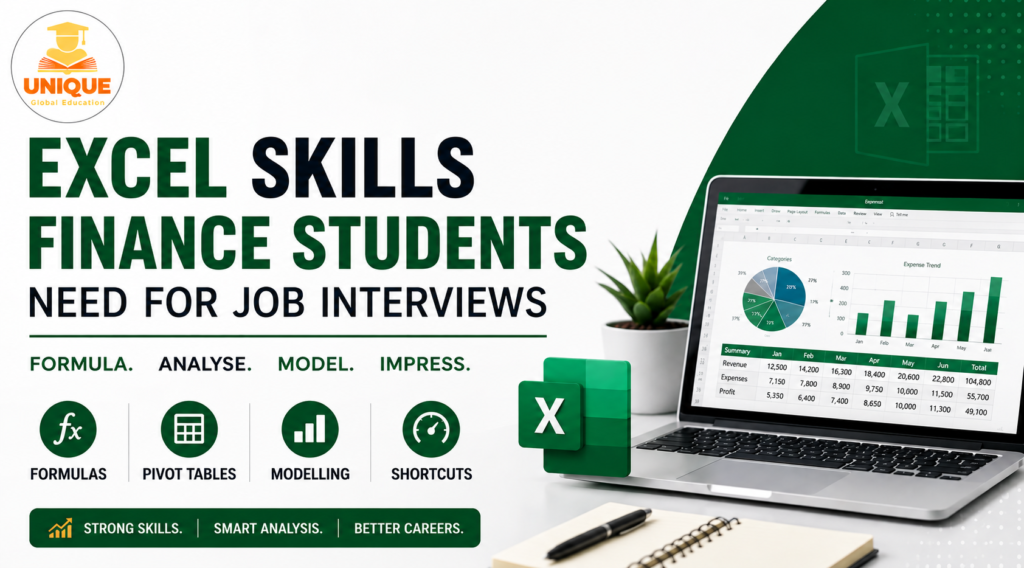
If you’re eyeing CFA-type roles, practice building a basic three-statement model. If you’re CMA US and looking at FP&A or costing, get quick with things like SUMIFS, pivot tables, variance templates. ACCA candidates should be comfortable with reconciliations and basic automation, since a lot of reporting jobs still live in spreadsheets.
If the job description mentions Power BI or Tableau, spend a weekend learning the basics. You won’t become an expert in two days, but it shows you actually read the JD instead of sending a generic application.
Actually, Research the Company
Reading the About page doesn’t count as research. Look at their recent results if they’re public, read what’s happening in their industry, understand who their competitors are. If it’s a smaller company, find out who their clients are and what problems they usually solve for them.
This matters because when they ask “why do you want to work here,” a generic answer about growth and learning falls flat. Mention something specific, a recent move the company made, a shift in their services, something happening in their sector, and you immediately sound like someone who actually looked into this rather than applying everywhere at once.
Don’t Be Awkward About Salary
A lot of candidates fresh out of CMA US, ACCA or CFA feel weird bringing up money, like it makes them look greedy. It doesn’t. Know your market range before you walk in. Check Glassdoor, Ambition Box, or just talk to seniors who cleared the same qualification recently.
Also be ready for the “where do you see yourself in a few years” question. They’re not looking for a rehearsed line. They want to know if the usual path for your qualification, cost accountant to finance manager for CMA US, research associate to portfolio manager for CFA, actually fits what they can offer you.
Do the Mock Interviews
If you’ve cleared CMA US, ACCA or CFA and haven’t done at least a couple of mock interviews before the real thing, you’re skipping a step that matters. Get a senior or a mentor or even a friend who recently went through the process to grill you. Record yourself answering a few common questions and watch it back. It’s uncomfortable but you’ll catch things, filler words, rambling, awkward pauses, that you had no idea you were doing.
Last Word
CMA US, ACCA or CFA gets you the interview. What happens next depends on whether you can connect what you studied to the actual job in front of you. Nobody’s hiring the certificate. They’re hiring someone who can use what it represents from day one. Walk in with that mindset and the interview stops feeling like a test.
Frequently Asked Questions
Depends entirely on the role. CMA US works for management accounting and FP&A, ACCA fits reporting, audit and tax roles, CFA is strongest for investment and research work. Match the qualification to the job, don’t rank them against each other.
Varies by company, but expect applied questions, not just definitions. You might get asked to walk through a ratio, explain a costing method, or talk through how you’d value a company. Being able to apply it matters more than reciting it.
The certification gets you noticed but interviewers usually want some applied exposure, articleship, internships, projects, anything real. If you don’t have much formal experience, talk about internships or self-initiated analysis you’ve done on your own.
Yes, more than people expect. A lot of finance roles still run on Excel for reporting, and Power BI or Tableau is becoming common for dashboards. Even basic comfort with these tools, shown confidently, puts you ahead of candidates who only talk theory.
Treating it like an extension of the exam. Over-explaining textbook definitions instead of showing how they’d actually apply the knowledge to a real business problem. Interviewers want judgment, not a recap of the syllabus.
Read More
Excel Skills Finance Students Need for Job Interviews
Corporate Finance: Career Guide, Roles & Skills
ACCA for Working Professionals: Study Plan and Career Benefits
All About ACCA Exemptions for CA Inter, CA Final, and CA Qualified